1. Introduction
The global energy landscape is undergoing a transformation so profound that its effects are being felt in the very heartbeat of our modern society: the electrical grid. For over a century, grid stability was a simple, albeit complex to execute, equation of supply and demand. Power plants—coal, gas, nuclear, hydro—would generate a predictable, steady flow of electrons, and grid operators would meticulously turn generation up or down to match the daily and seasonal rhythms of consumption. This was the era of centralized, dispatchable power.
Enter the dual disruptors: the explosive growth of intermittent renewable energy sources like wind and solar, and the escalating demand from electrification of transport and industry. By 2025, this transition has moved from theory to palpable reality, and the hero enabling this new paradigm is the Utility-Scale Battery Energy Storage System (BESS).
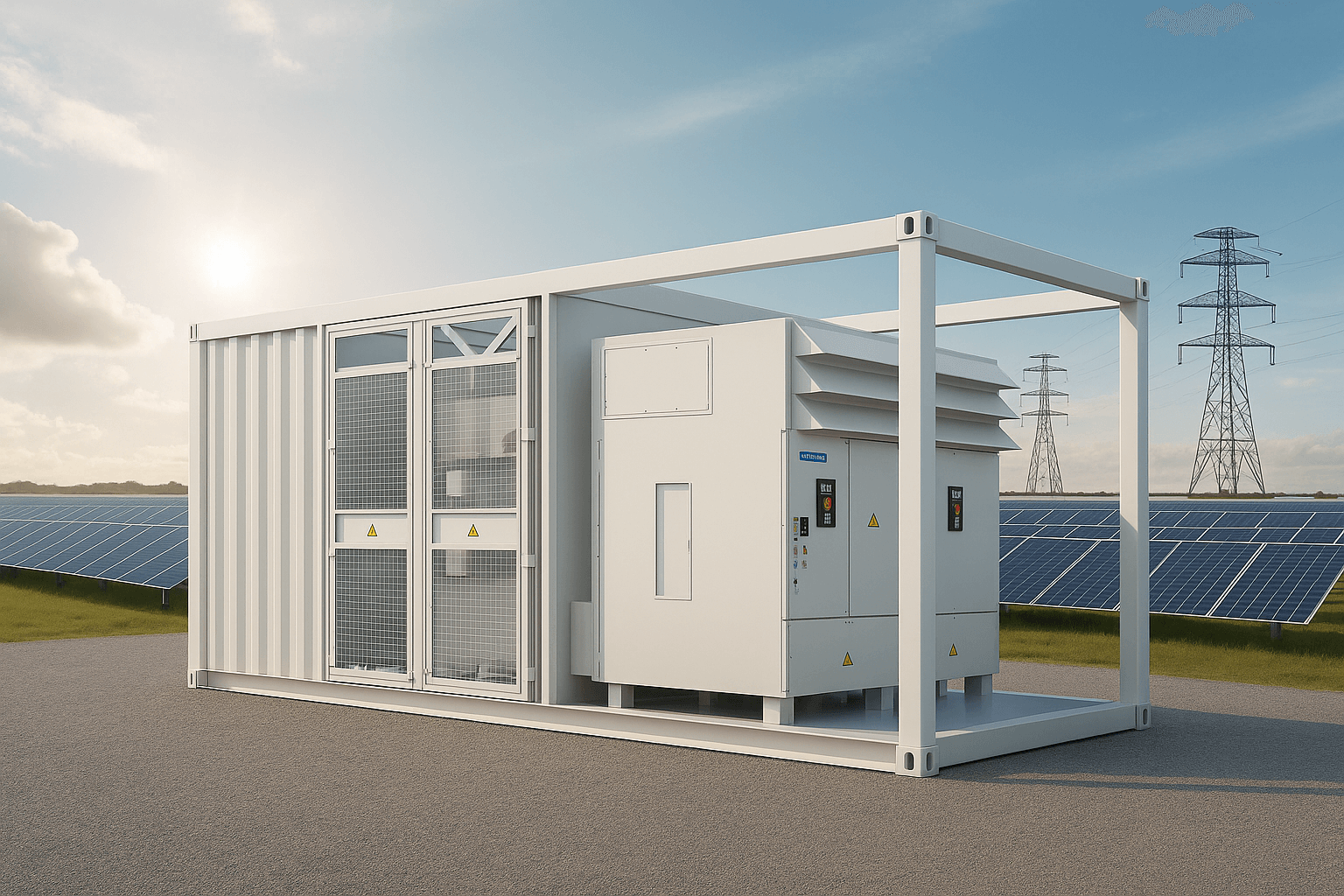
A utility-scale BESS is not the power bank on your desk; it is a colossal electrochemical fortress. We are talking about installations with capacities ranging from tens to hundreds of megawatts (MW), with storage durations typically between 2 to 4 hours, though longer durations are rapidly emerging. These systems are comprised of thousands of lithium-ion battery cells (and increasingly, alternative chemistries like flow batteries for longer duration) housed in modular containers, orchestrated by sophisticated power conversion systems (PCS) and a brain-like energy management system (EMS) that makes millisecond decisions. In 2025, these behemoths are no longer pilot projects or novelties; they are critical infrastructure assets, fundamentally reshaping grid stability through four primary mechanisms.
2. The Arbiter of Frequency: From Inertia to Intelligent Response
Traditional thermal power plants provide inherent stability through rotational inertia—the kinetic energy of their massive spinning turbines acts as a buffer against sudden changes in frequency. Wind and solar farms, being inverter-based resources (IBRs), lack this physical inertia. A sudden drop in generation or a spike in demand can cause frequency to dip, potentially triggering cascading blackouts.
The BESS is the perfect antidote. Its response time is not measured in seconds or minutes, but in milliseconds. Advanced grid-forming inverters allow BESS to not just follow the grid’s frequency but to actively create a stable voltage waveform, essentially mimicking the inertia of a spinning turbine. In 2025, grid operators contract BESS assets specifically for Frequency Regulation (FR) and Fast Frequency Response (FFR) services. They act as the grid’s shock absorbers, instantly injecting or absorbing power to keep the system’s frequency within a tight, safe operating band, preventing disturbances from becoming disasters.
3. The Architect of Renewable Capacity Firming
The sun sets every evening, and the wind is unpredictable. This variability, known as intermittency, is the single greatest challenge of integrating high volumes of renewables. A BESS acts as a “time machine” for green energy. During peak generation hours—bright sunny afternoons or windy nights—the BESS soaks up excess megawatt-hours that would otherwise be curtailed (wasted). It then dispatches this stored energy during periods of high demand and low renewable generation, such as early evenings when solar output plummets but air conditioning and lighting loads remain high.
This process, called Renewable Energy Time-Shifting or Capacity Firming, transforms intermittent wind and solar into a dispatchable, reliable resource. In 2025, nearly all new utility-scale solar projects are co-located with a BESS, creating hybrid power plants that can deliver predictable, firm power to the grid, much like a traditional gas peaker plant, but without the emissions.
4. The Deferrer of Costly Infrastructure
The traditional solution to increasing peak demand or grid congestion was to build new power plants or reinforce transmission and distribution lines—a process that is incredibly capital-intensive, slow, and often faces public opposition. BESS offers a more elegant, software-defined solution.
Strategically placed BESS units can provide “Virtual Transmission.” During periods of line congestion, they can discharge power at the load end, alleviating the strain on the constrained asset. Similarly, they can perform “Peak Shaving” by discharging during hours of highest local demand, deferring or even eliminating the need for expensive upgrades to substations or transformers. In 2025, utility planners run sophisticated models to identify the most congested and stressed parts of their network, and they deploy BESS as a non-wires alternative (NWA), saving ratepayers billions in infrastructure costs and achieving stability goals faster.
5. The Guardian of Resilience and Black Start Capability
Extreme weather events, from hurricanes to heatwaves, are putting unprecedented stress on grids worldwide. When a blackout occurs, restarting a grid—a process called Black Start—is a delicate operation. Traditional black start units are typically diesel generators or hydro plants that can start without an external power source.
A BESS, with its ability to instantly provide a large burst of power and establish a stable grid waveform, is an ideal black start resource. It can be used to re-energize critical infrastructure and slowly bring other generators online, significantly reducing outage times. Furthermore, BESS installations at critical facilities like hospitals, data centers, and water treatment plants provide unparalleled resilience, acting as a giant uninterruptible power supply (UPS) that can keep communities safe for hours during widespread grid outages.
6. Q&A — 9 Answers on How BESS Is Reshaping Grid Stability