Table of Contents
Executive Summary
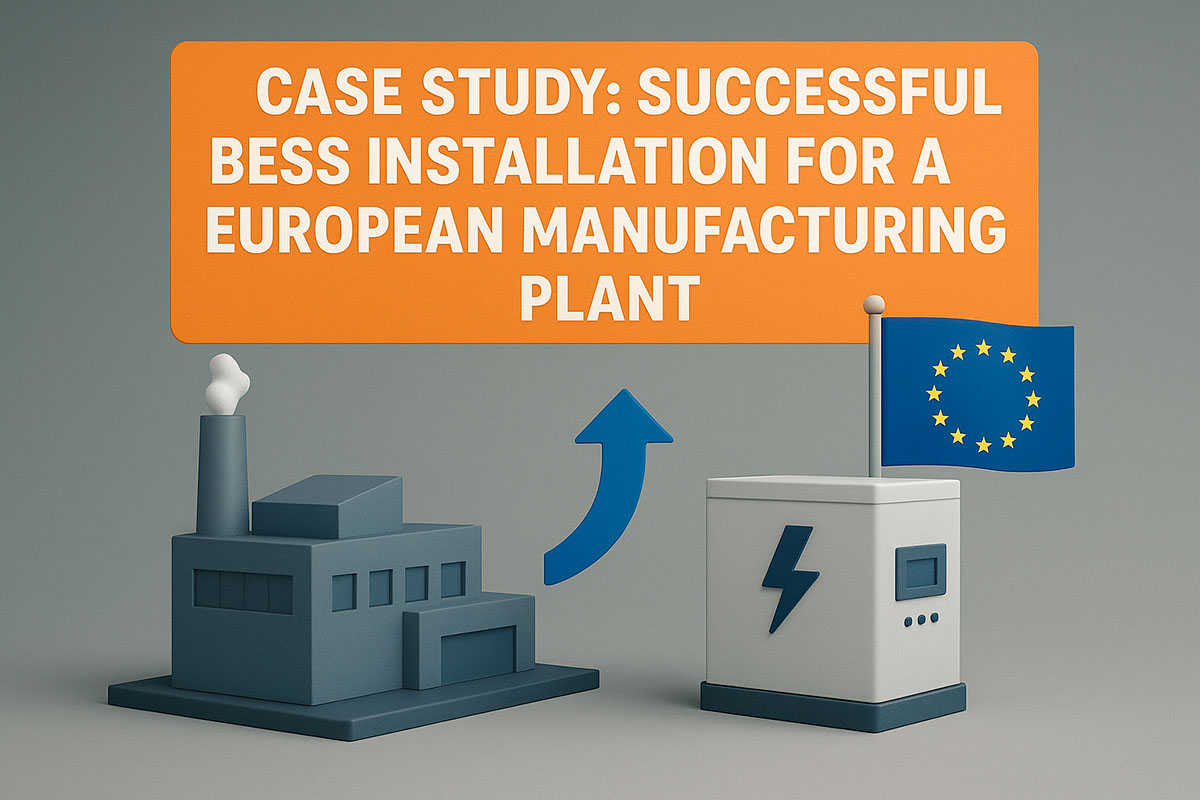
This case study examines the successful implementation of a 2.5 MWh Battery Energy Storage System (BESS) at a major automotive components manufacturing plant in Germany. Facing rising energy costs and stringent sustainability targets, the company partnered with leading energy storage provider EcoVolt Solutions to deploy a comprehensive energy management solution. The project, completed in Q2 2023, has delivered exceptional results, including 28% reduction in electricity costs, 42% decrease in peak demand charges, and enhanced power quality across the facility. The installation has positioned the plant as a leader in industrial energy innovation while achieving a projected payback period of just 3.8 years.
Company Background and Challenges
The manufacturing plant, operated by AutoParts Europe GmbH, is a Tier 1 supplier to several major automotive OEMs. Located in Bavaria, the facility operates 24/7 with an annual electricity consumption of 8.5 GWh. The plant faced several critical challenges:
Primary Challenges
- Escalating Energy Costs: Electricity prices had increased by 45% over three years
- High Demand Charges: Peak demand penalties accounted for 35% of total electricity costs
- Power Quality Issues: Voltage sags affecting sensitive manufacturing equipment
- Sustainability Targets: Corporate mandate to reduce carbon footprint by 30% by 2025
- Grid Reliability: Increasing frequency of brief power interruptions affecting production
BESS Solution Design and Implementation
The comprehensive energy storage solution was designed to address multiple operational requirements simultaneously. The implementation followed a structured four-phase approach:
System Configuration
- Battery Capacity: 2.5 MWh lithium-ion phosphate (LFP)
- Power Rating: 1.25 MW continuous power output
- Containerized Solution: Two 40-foot containers with integrated cooling and fire suppression
- Control System: Advanced EMS with AI-driven optimization algorithms
- Grid Connection: Medium voltage connection at 10 kV
Implementation Timeline
The project was completed within 6 months, from initial assessment to full operational status:
- Phase 1 (2 months): Energy audit and system design
- Phase 2 (1 month): Site preparation and infrastructure upgrades
- Phase 3 (2 months): BESS installation and commissioning
- Phase 4 (1 month): System optimization and staff training
Operational Results and Performance
Since commissioning, the BESS has demonstrated outstanding performance across all key metrics:
| Performance Metric | Before BESS | After BESS | Improvement |
|---|---|---|---|
| Monthly Electricity Costs | €85,000 | €61,200 | 28% reduction |
| Peak Demand Charge | €32,000/month | €18,560/month | 42% reduction |
| Power Factor | 0.82 | 0.98 | 20% improvement |
| Carbon Emissions | 1,250 tCO2e/year | 890 tCO2e/year | 29% reduction |
| Energy Efficiency | 78% | 86% | 8% improvement |
Key Operational Benefits
- Peak Shaving: Automated discharge during high-cost periods
- Load Leveling: Smoothing of demand spikes from heavy machinery
- Backup Power: 45 minutes of critical load support during outages
- Voltage Support: Improved power quality for sensitive equipment
- Frequency Regulation: Enhanced grid stability participation
Financial Analysis and ROI
The financial performance of the BESS installation has exceeded initial projections, delivering substantial returns through multiple revenue streams:
Cost-Benefit Analysis
- Total Project Cost: €1.2 million
- Government Grants: €300,000 (25% of project cost)
- Annual Savings: €285,600
- Simple Payback Period: 3.8 years
- Net Present Value (10 years): €1.45 million
- Internal Rate of Return: 26.5%
Revenue Streams
- Energy Arbitrage: 62% of total savings
- Demand Charge Reduction: 28% of total savings
- Grid Services: 8% of total savings
- Maintenance Savings: 2% of total savings
Technical Specifications
The BESS installation features state-of-the-art technology designed for reliability and performance:
Core Components
- Battery Technology: Lithium Iron Phosphate (LFP)
- Cycle Life: 6,000 cycles at 80% depth of discharge
- Efficiency: 94% round-trip efficiency
- Temperature Range: -20°C to +50°C operational
- Warranty: 10 years performance guarantee
- Communication: IEC 61850 protocol for grid integration
Lessons Learned and Best Practices
The successful implementation provided valuable insights for future industrial BESS projects:
Key Success Factors
- Comprehensive Energy Audit: Detailed load profiling enabled optimal system sizing
- Stakeholder Engagement: Early involvement of operations and maintenance teams
- Regulatory Compliance: Proactive engagement with local grid operator
- Training Program: Comprehensive staff training for system operation
- Performance Monitoring: Real-time monitoring with predictive maintenance
Implementation Recommendations
- Conduct thorough site assessment before system design
- Plan for future expansion capabilities
- Implement cybersecurity measures from day one
- Establish clear performance metrics and KPIs
- Develop contingency plans for system maintenance
Conclusion and Future Outlook
The BESS installation at AutoParts Europe GmbH represents a landmark achievement in industrial energy management. The project has not only delivered substantial financial returns but has also enhanced operational resilience and sustainability performance. The success of this installation demonstrates the compelling business case for energy storage in manufacturing environments, particularly in regions with high energy costs and ambitious climate targets.
Looking ahead, the company is exploring phase two expansion, including integration with on-site solar generation and participation in advanced grid services programs. The lessons learned from this project provide a valuable blueprint for other manufacturing facilities considering energy storage solutions. As energy markets continue to evolve and sustainability pressures increase, BESS technology offers a proven pathway to both economic and environmental benefits for industrial operations across Europe.